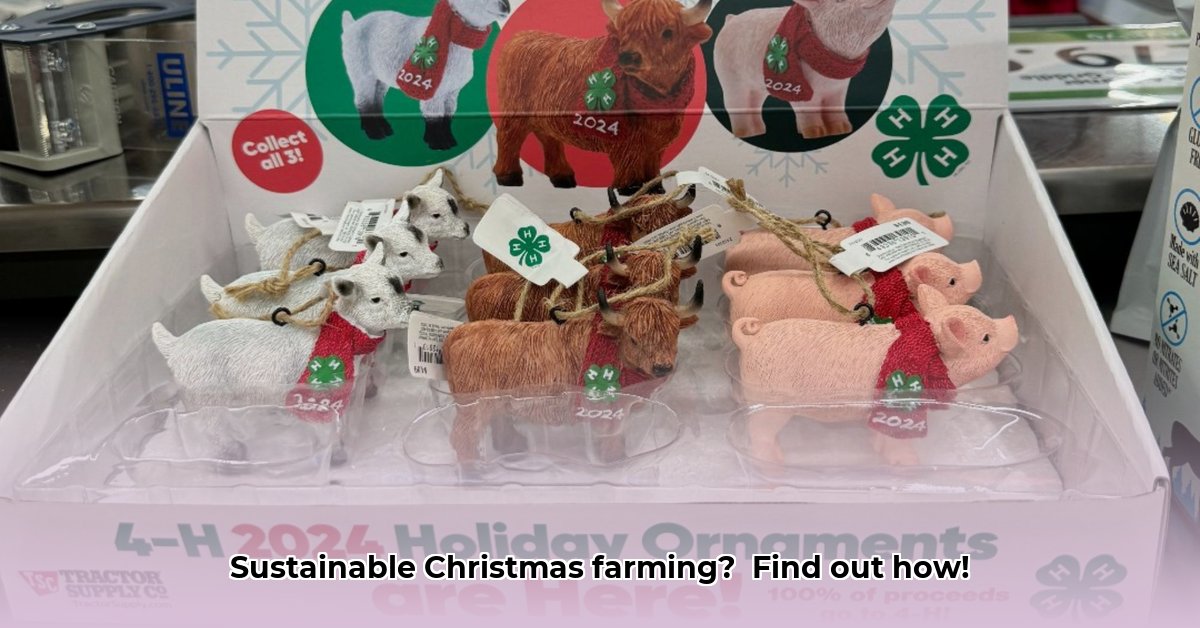
Sustainable Farming for a Profitable Holiday Season
Let's face it: everyone loves a good Christmas story, and yours could be about how your farm is making a real difference. Consumer demand for sustainably raised products is booming. This holiday season, tap into that market and boost your bottom line simultaneously. This guide shows you how to make your farm a model of sustainable agriculture, leveraging your local Christmas Cow Tractor Supply store as a key partner. It's not just about holiday cheer; it's about building a future-proof, profitable, and environmentally responsible farm. For store locations, check out your local store.
The Growing Demand for Sustainable Agriculture: A Market Opportunity
The shift toward sustainable agriculture isn't a trend; it's a fundamental change in consumer behavior. People increasingly care about where their food comes from and how it's produced. This growing awareness presents a significant opportunity for farmers committed to ethical and environmentally conscious practices. Christmas Cow Tractor Supply stores are perfectly positioned to connect your sustainable products with this conscious consumer base. Aren't you curious about the potential increase in revenue from this growing market? Studies show a double-digit percentage increase in demand for sustainably sourced products annually.
Making Your Farm More Sustainable: Practical Steps for Success
Sustainable farming isn't about drastic overnight changes; it's about taking small, manageable steps that accumulate to make a significant impact.
Water-Wise Farming: Invest in water-efficient irrigation systems (e.g., drip irrigation, precision irrigation). This conserves water, reduces costs, and minimizes your environmental impact. Consider implementing smart irrigation technologies using soil moisture sensors for optimized watering schedules.
Healthy Soil, Happy Plants: Employ no-till farming (minimizing soil disturbance) to protect soil structure, prevent erosion, and enhance soil health. This leads to healthier plants and higher yields.
Crop Rotation: A Balanced Approach: Rotate your crops annually to prevent soil depletion and reduce pest and disease pressure. A diverse crop rotation imitates natural ecosystems, enhancing soil fertility and biodiversity.
Smart Pest Management: Utilize Integrated Pest Management (IPM), a strategy that minimizes pesticide use by focusing on prevention and natural pest control methods. This protects beneficial insects and safeguards the environment.
Organic Certification (Optional): If you meet the requirements, organic certification is a powerful marketing tool, enhancing your brand and commanding premium prices.
Marketing Your Sustainable Practices: Showcasing Your Commitment
Being sustainable is excellent, but it's ineffective if your customers don't know about it.
Honest and Transparent Labeling: Clearly label your products, highlighting your sustainable practices using terms like "sustainably raised," "environmentally friendly," or "naturally grown."
Share Your Farm's Story: Connect with potential customers through your website and social media, telling your farm's unique story and demonstrating your commitment to sustainable agriculture.
Partner with Christmas Cow Tractor Supply: Leverage their established customer base interested in local and sustainable products.
Holiday Gift Packages: Craft attractive holiday gift packages featuring your products to appeal to consumers seeking unique and meaningful gifts.
The Christmas Cow Tractor Supply Advantage: Access to Your Ideal Customer
Christmas Cow Tractor Supply stores provide direct access to a customer base already interested in supporting local farmers and sustainable practices. They are a powerful ally in reaching your ideal customer.
Challenges and Opportunities: A Realistic Perspective
Embracing sustainable practices requires upfront investment (new technologies, certifications). However, long-term benefits (increased yields, customer loyalty, environmental stewardship) far outweigh initial costs. Government subsidies and increasing consumer demand for sustainable products provide incentives that can offset these challenges.
Final Thoughts: A Season of Success and Sustainability
This holiday season is a crucial opportunity to showcase your sustainable farming practices. By partnering with Christmas Cow Tractor Supply, you can increase your farm's profitability while contributing to a healthier planet. This is a win-win scenario, ensuring a successful and meaningful holiday season. Let's make this Christmas your best yet!
How to Increase Organic Farm Profitability Using Precision Agriculture
Key Takeaways:
- Precision agriculture significantly improves organic farm profitability and sustainability.
- Implementing precision agriculture involves initial investment in technology and data management strategies.
- Success requires accurate data, appropriate technology, and efficient data analysis.
- Collaboration and governmental initiatives are crucial.
- Long-term benefits outweigh initial challenges.
Precision Agriculture: Optimizing Organic Farming
Maintaining high yields while adhering to organic standards is challenging. Precision agriculture, utilizing GPS, sensors, drones, and AI, offers a solution. It provides precise control over resources, moving from guesswork to guided action.
Data-Driven Decision Making: The Power of Information
Precision agriculture provides real-time maps of soil conditions, moisture levels, and pest infestations. This data empowers informed decision-making, optimizing fertilizer application, irrigation, and pest management. Targeted interventions minimize waste and maximize efficiency.
Increased Profitability and Environmental Responsibility
Optimized resource use reduces costs related to fertilizers, water, and pesticides, increasing profitability. Simultaneously, it significantly reduces the farm's environmental footprint.
Addressing the Challenges: Investment and Accessibility
While the benefits are substantial, implementing precision agriculture requires an upfront investment in technology and expertise. Data management can be complex and require specialized training. Overcoming this challenge requires making technology accessible and affordable to all farmers via government incentives, training programs, and collaborative support.
Steps to Successful Precision Agriculture Implementation
- Assess your farm's needs: Identify areas where precision agriculture can be most beneficial.
- Research and select appropriate technologies: Consider cost, usability, and your specific needs.
- Start small with a pilot program: Test the technology on a smaller scale before widespread implementation.
- Invest in training and support: Ensure your team is adequately trained to utilize and interpret gathered data.
- Embrace data analysis: Utilize data to make informed decisions about your farming practices.
- Seek collaborative support: Connect with other farmers, advisors, and government programs.
A Sustainable Future: Embracing Technology for a Better Tomorrow
Precision agriculture has the potential to revolutionize organic farming. It provides a path to higher profitability and environmental sustainability, securing a better future for organic farms and the planet.